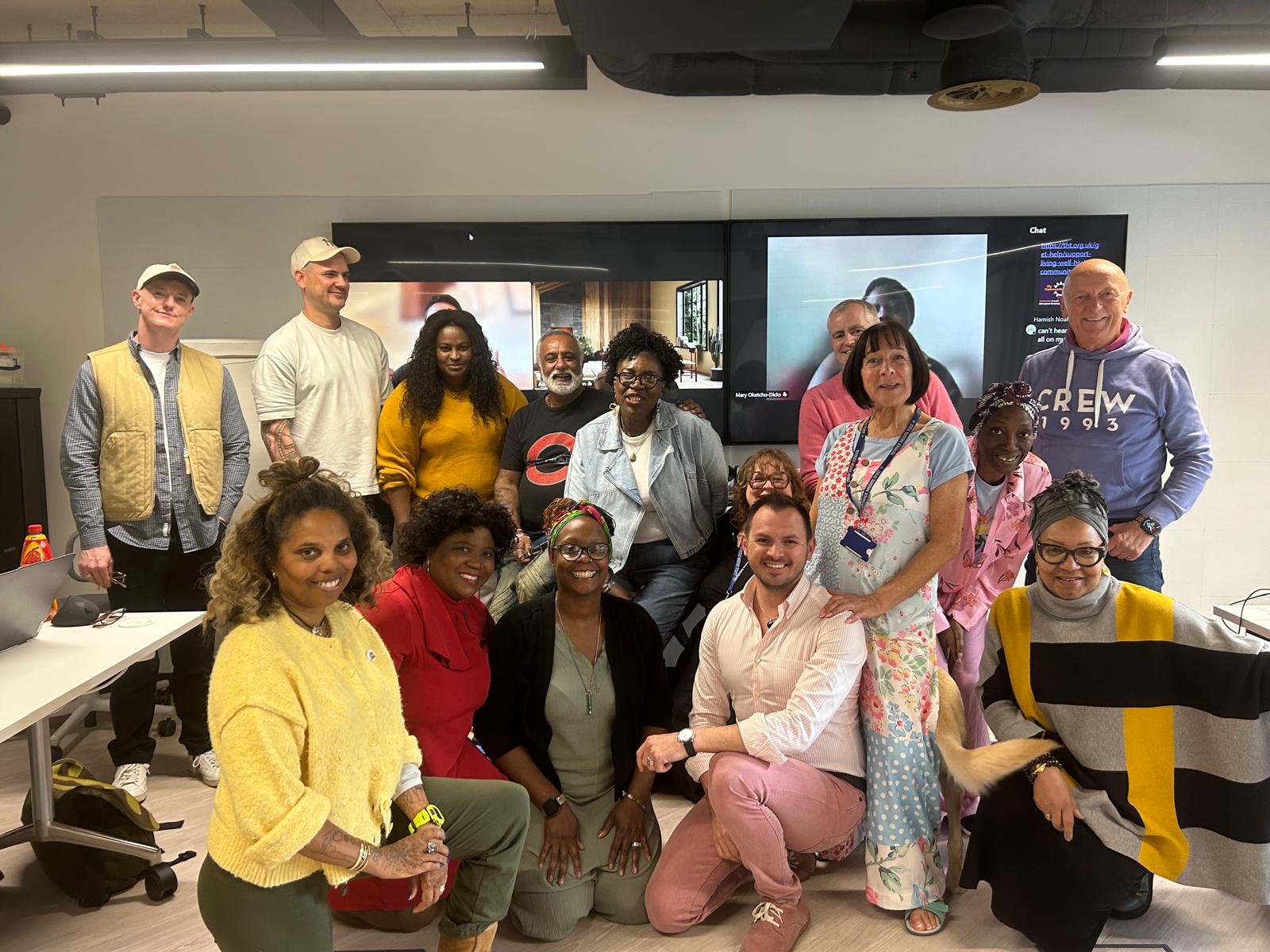
What happens when people living with HIV are given the opportunity to share their stories, challenge misconceptions, and become visible role models in their communities?
Over the past three years, the London HIV Ambassadors Programme has shown just how powerful lived experience can be.
Delivered by Terrence Higgins Trust and funded through Fast-Track Cities London, the programme brings together people living with HIV from diverse backgrounds, equipping them with the skills, confidence and support to share their experiences in settings ranging from hospitals and universities to police services, conferences and community organisations.
Together, the Ambassadors have reached more than 6,000 people through talks, workshops and events across London. Their impact has extended even further through media appearances, social media campaigns, podcasts and public engagement activities – reaching an estimated 160,000 people and helping to challenge persistent myths and misconceptions about HIV.
But the programme's success can’t be measured in numbers alone.
Hearing directly from people living with HIV has led to meaningful shifts in both attitudes and professional practice. Healthcare workers have reported greater confidence discussing HIV with patients and colleagues, a deeper understanding of HIV-related stigma, and a stronger commitment to creating more inclusive services.
A student paramedic at St George’s Hospital said, 'Amazing, reshaped my understanding of HIV and is making me question previous practice I’ve seen. This will positively affect my treatment of patients! Thank you.'
Police officers gained knowledge of HIV and increased confidence when responding to HIV-related situations in their work.
'I found your session really helpful. I definitely came away feeling a lot more knowledgeable and feel I would be less likely to worry if I did come into contact with someone who had HIV,' a Metropolitan Police Officer told us.
Again and again, we have heard the same thing: a real person's story brings HIV to life in a way that facts and statistics alone never can. By creating space for honest conversations, Ambassadors help audiences move beyond outdated assumptions so they can develop a more accurate understanding of what it means to live with HIV today.
Just as importantly, the programme transformed the lives of many of the Ambassadors themselves. Through training, peer support and speaking opportunities, participants described increased confidence, stronger connections with others living with HIV, and a renewed sense of purpose. For many, becoming an Ambassador was an opportunity to turn personal experiences into positive change for others.
'Being an Ambassador gave me the opportunity to use my lived experience to help others feel seen, understood, and less alone. Sharing my story felt meaningful because it helped challenge stigma and showed that people living with HIV can live full, healthy, and empowered lives,' said Louise Vallace, a London HIV Ambassador.
London HIV Ambassador Kuba Krzyzynski was diagnosed with HIV a few years ago and wanted to share his story to help break down the stigma that still affects people’s lives. 'As a proud Eastern European gay man, I wanted to use my voice to help reduce HIV stigma and break the silence that still surrounds HIV in many of our communities. Eastern European communities are one of the largest in the UK, yet very few people speak openly about living with HIV. I wanted to help break that taboo and show others they are not alone.'
The success of the programme highlights a simple but powerful lesson: when people with lived experience are given a platform, people listen. Their stories have the power to reduce stigma, build empathy and inspire action.
While the funded programme has now come to a close, its legacy continues through Terrence Higgins Trust's Positive Voices speaker programme. The voices, experiences and leadership of the Ambassadors will remain at the heart of efforts to end HIV stigma and improve understanding of HIV across London and beyond.
Because changing hearts and minds starts with listening to people's stories.